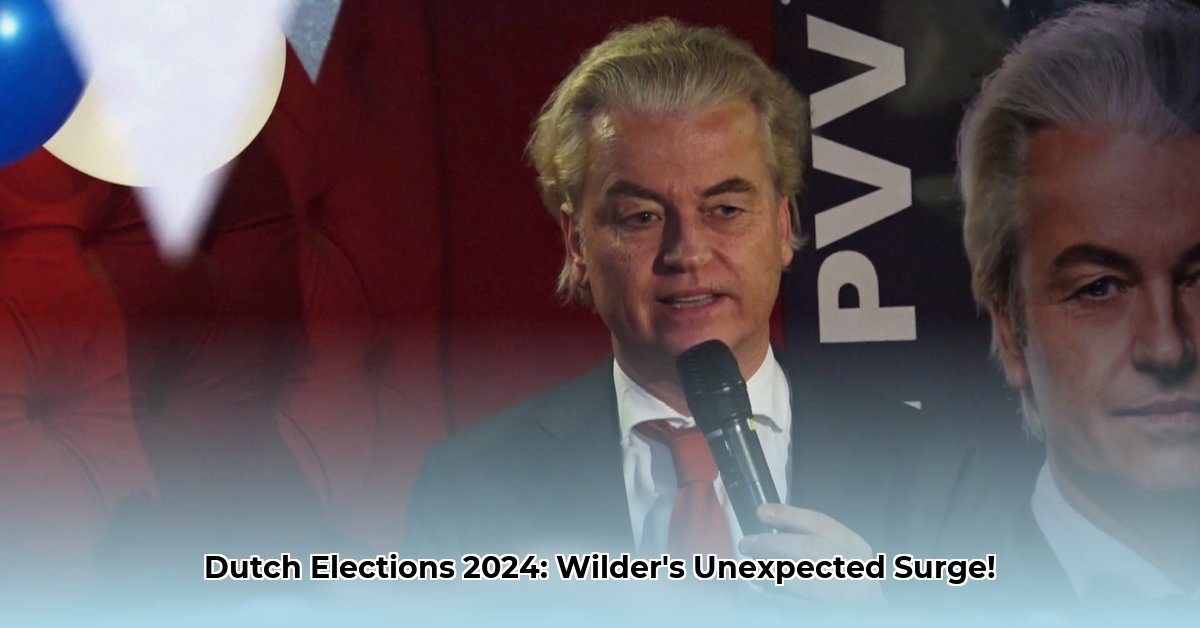
Geert Wilders and the 2024 Dutch Elections: A Nation Divided
The 2024 Dutch elections are casting a long shadow, with Geert Wilders and his Party for Freedom (PVV) emerging as a significant force. His resurgence taps into deep-seated anxieties, particularly around immigration, and presents a complex challenge to Dutch politics. Could his success reshape the nation's future, or will his influence ultimately prove limited?
The Immigration Issue: A Root of Discontent?
Immigration is undeniably a key factor fueling Wilders's rise. Many Dutch citizens express concern about rising living costs and feel that increased immigration strains resources. The presence of an estimated 23,000 to 58,000 undocumented migrants further complicates the issue. But is this a simple case of numbers, or is something more at play? Isn't it true that economic hardship often breeds discontent, regardless of immigration trends? This makes understanding the underlying causes critical. Professor Anna van der Meulen, sociologist at Leiden University, notes that “economic anxieties often find convenient scapegoats, and in this case, immigrants have become a target for many frustrated Dutch citizens." This highlights the need to address the root causes of discontent, rather than focusing solely on migration numbers.
Wilders' Strategy: Simplifying Complexities
Wilders's success lies in his ability to simplify complex issues, resonating with voters who feel unheard by mainstream politicians. His straightforward, often uncompromising, solutions appeal to those feeling left behind. However, this simplification raises serious questions. Is he genuinely addressing problems or exploiting anxieties for political gain? His “no soup police” statement, proposing criminalisation of aiding undocumented migrants, exemplifies his hardline approach. While lauded by some for its decisiveness, it's sharply criticised by others as divisive and potentially unlawful. This strategy, while effective in galvanising support, could prove a double-edged sword.
The New Asylum Law: A Point of Contention
Recent asylum law reforms underscore the political tension. The government justifies the changes as necessary for immigration control, but critics, including the Association of Dutch Municipalities and various migrant support organisations, deem them "legally untenable" and damaging to human rights. This highlights a fundamental clash of values, fueling further division. Will this new law become a significant battleground in the 2024 election campaign, further polarising the electorate?
Coalition Building: A Political Tightrope
The recent collapse of the ruling coalition underscores the fragility of Dutch politics. Even if the PVV performs strongly, forming a government will be a Herculean task. Potential coalition partners face a difficult choice: compromise their principles or risk prolonged political instability. Wilders's uncompromising stances make coalition building exceptionally challenging. International agreements and national laws severely limit his effective policy implementation, even with significant electoral success. This raises the question: how likely is a PVV-led coalition government, given these significant obstacles?
The 2024 Election: A Turning Point?
The 2024 election is pivotal, reflecting the Netherlands' vision for its future. Wilders's success mirrors underlying anxieties, but ignoring these concerns is unproductive. The path forward requires a delicate balance – addressing security concerns while upholding human rights and the rule of law.
Key Players and Their Stakes
The 2024 elections will be a contest of competing visions. What are the key stakes involved for the influential players?
- Geert Wilders & the PVV: Aiming for maximum votes and influencing coalition negotiations, with a long-term goal of policy change and increased party dominance.
- Potential Coalition Partners: Forced to assess the PVV's strength and determine acceptable compromises, aiming for stable governance, immigration control, and addressing social anxiety.
- Migrant Support Organizations: Advocating for fair treatment and opposing restrictive laws, with long-term goals of fighting discrimination, improving integration, and promoting inclusive policies.
- Dutch Municipalities: Facing the challenge of implementing the new asylum laws and allocating resources, aiming for effective integration and resource distribution.
- European Union Institutions: Monitoring compliance with EU laws and regulations, working towards policy compliance with EU human rights and immigration standards.
Risks and Uncertainties
The path forward is fraught with uncertainty. Identifying and mitigating potential risks is imperative.
- Increased Social Division (High Probability, Very High Impact): Requires dialogue promotion, tackling social and economic inequality, and strengthening community ties.
- Legal Challenges to Laws (High Probability, High Impact): Requires careful drafting, robust legal review, and broad-based consensus building.
- International Condemnation (Medium Probability, Medium Impact): Requires prioritising human rights, promoting transparency in communication, and effective international engagement.
- Political Instability (Medium Probability, Very High Impact): Requires inclusive coalition building, finding common ground on key issues, and strengthening democratic norms.
The 2024 Dutch election presents a critical juncture with high stakes. The outcome will profoundly shape the nation's political landscape and social fabric. While the future remains uncertain, the stakes, undoubtedly, are exceedingly high.